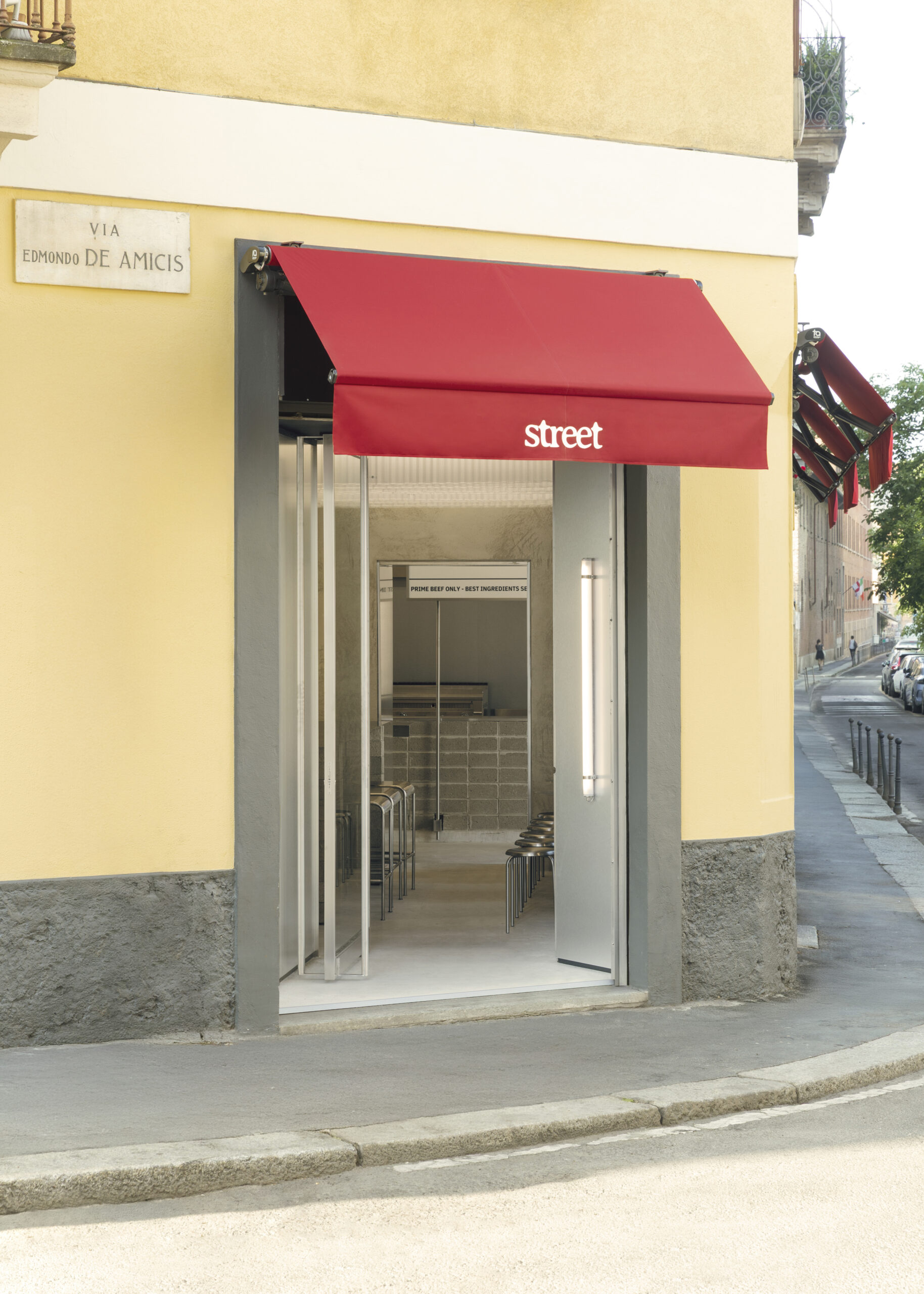

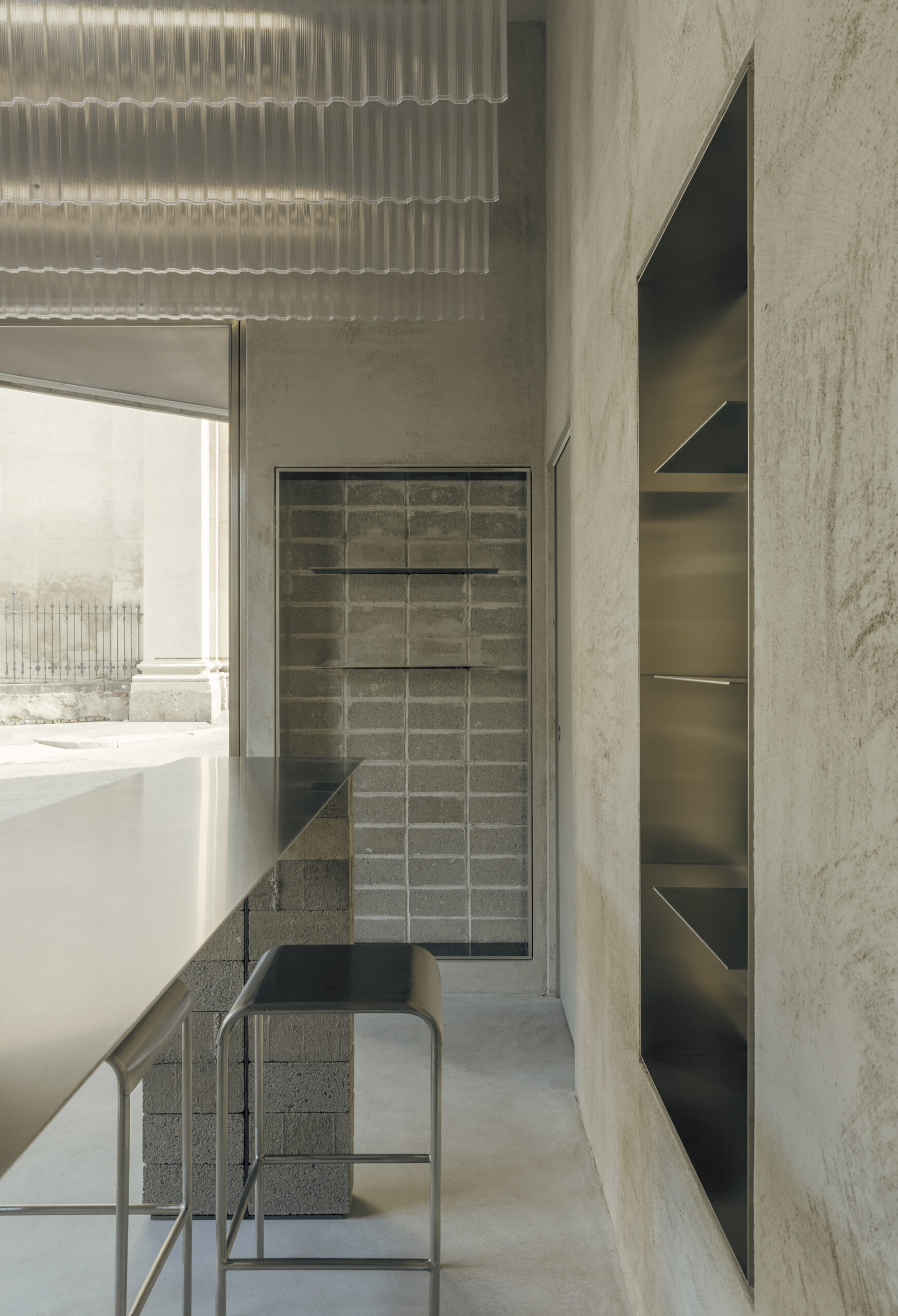
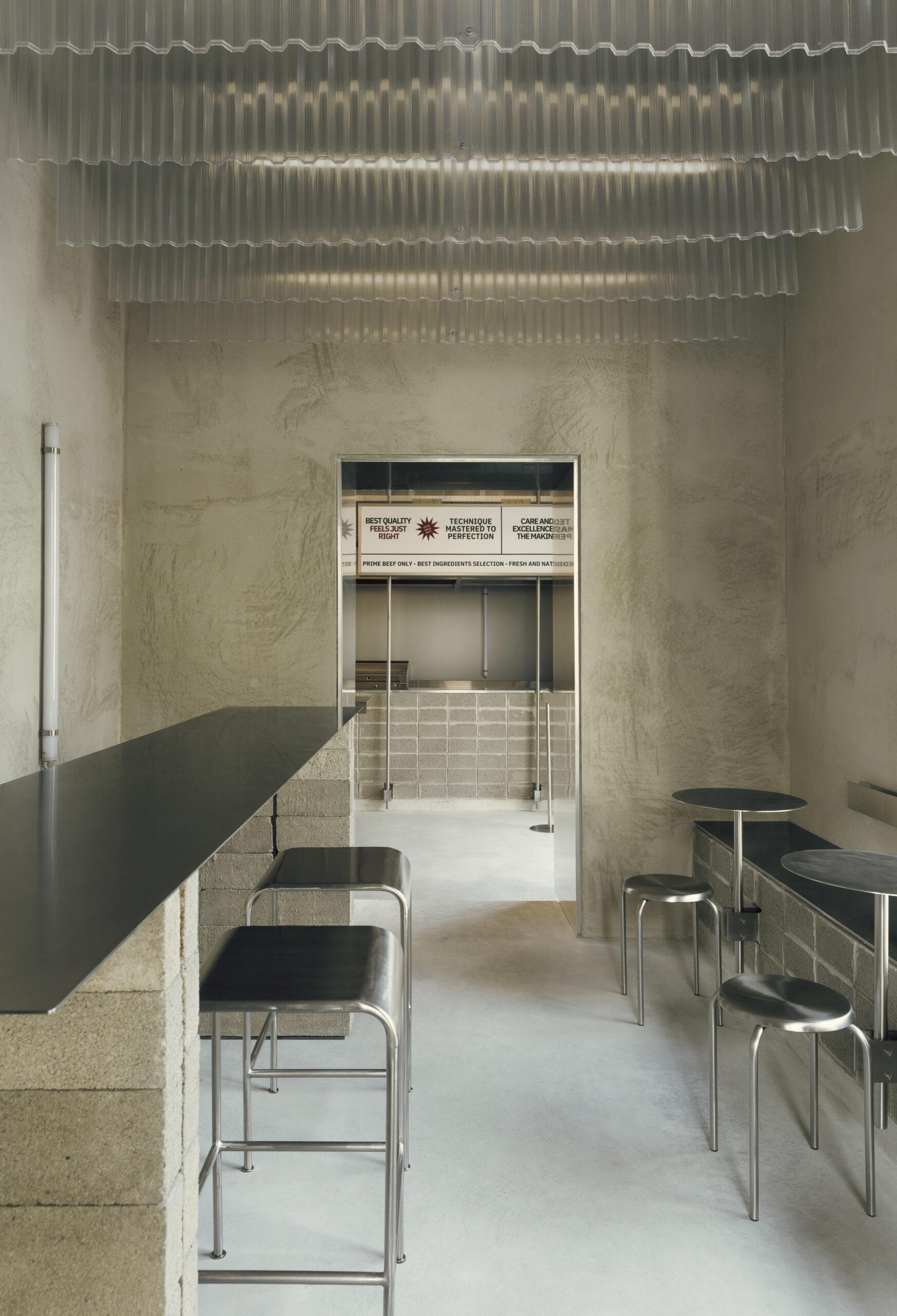
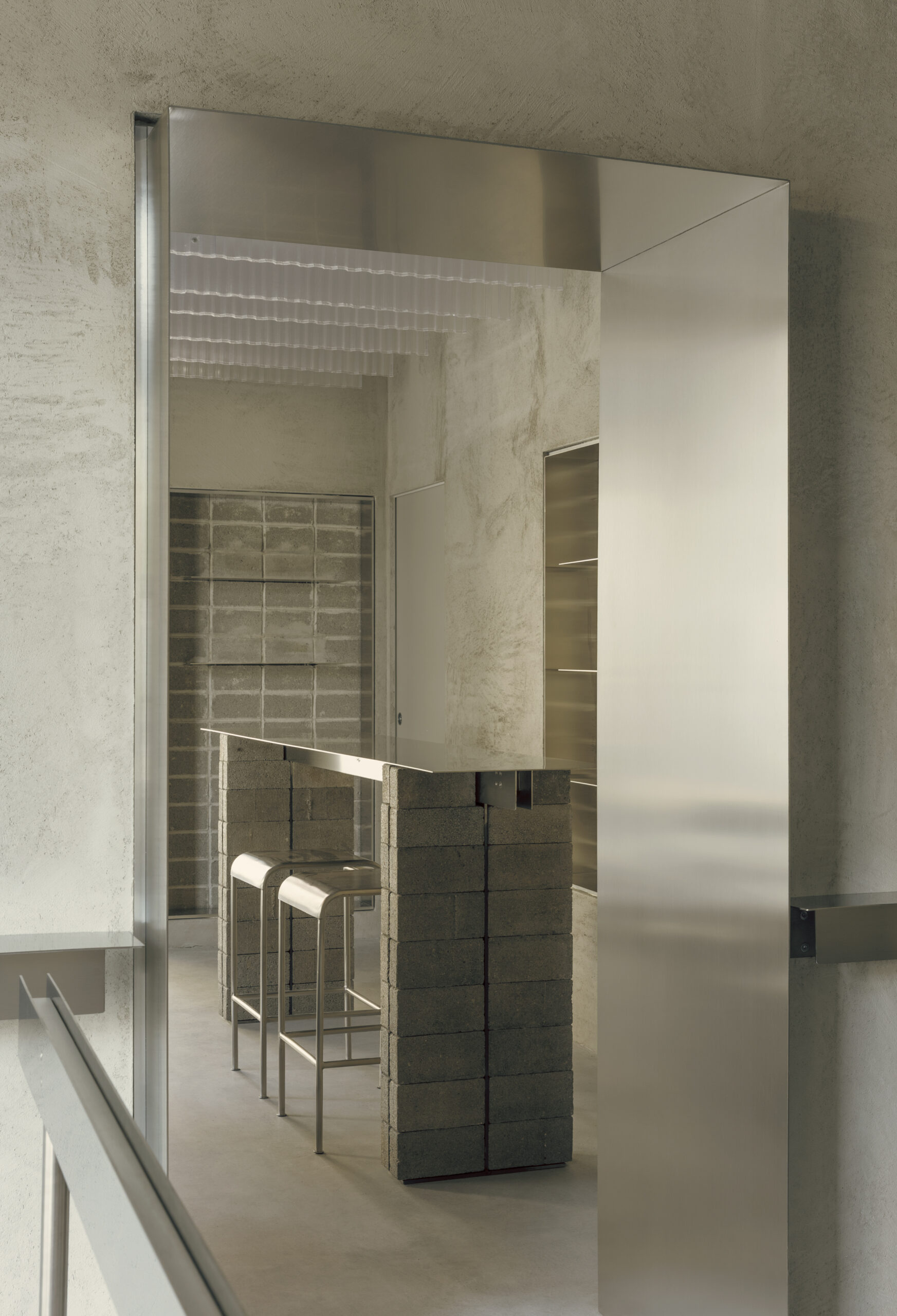
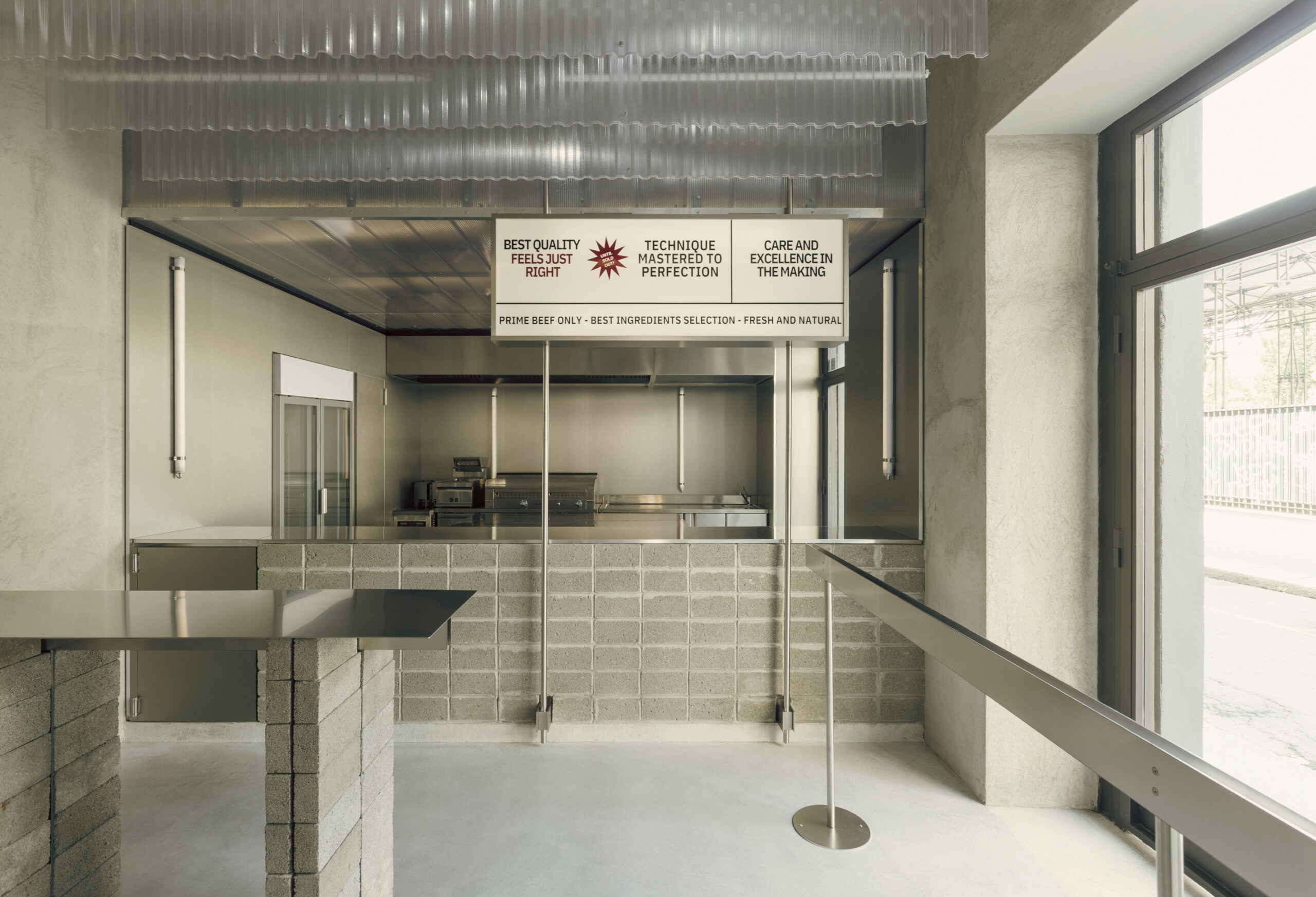
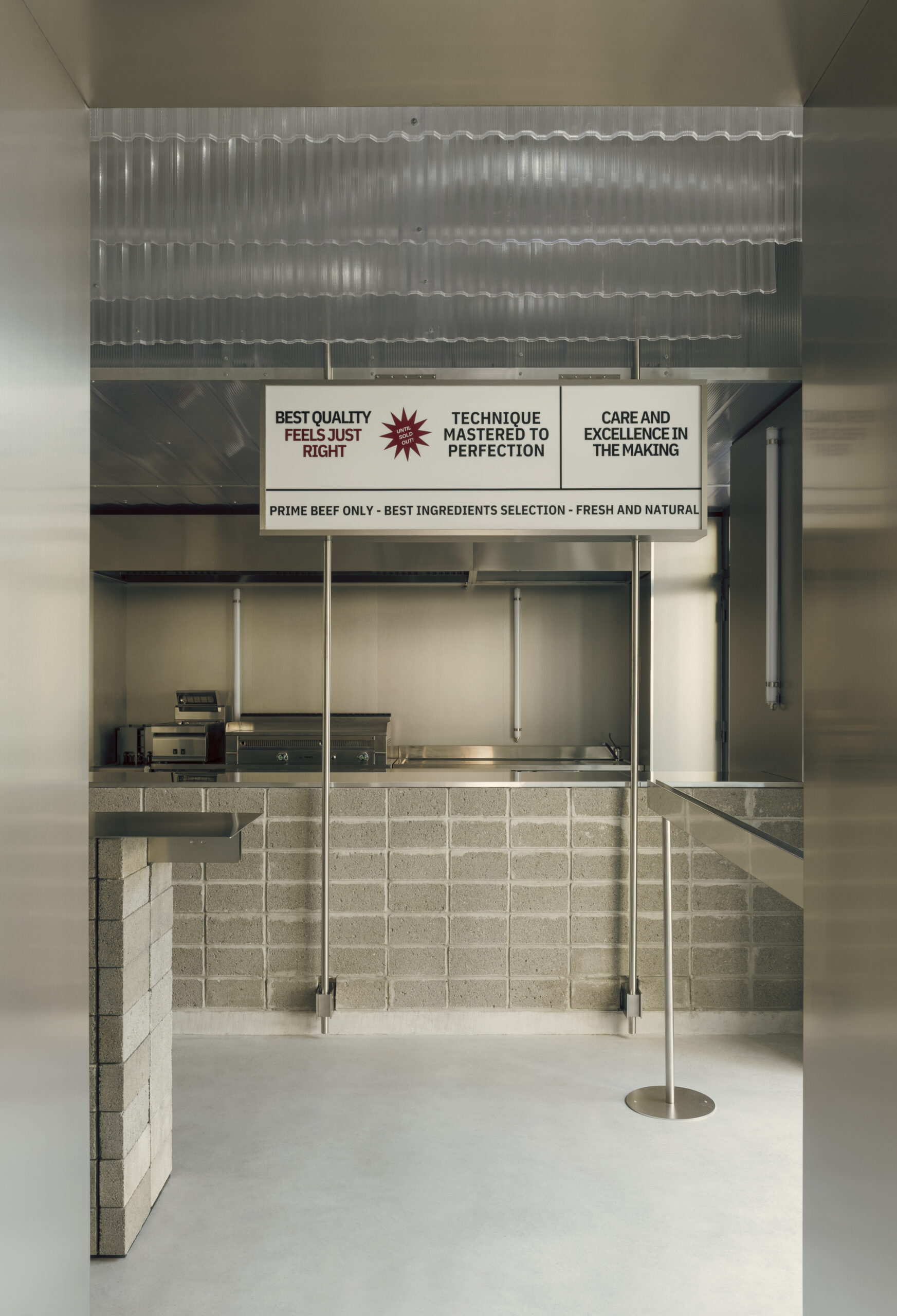
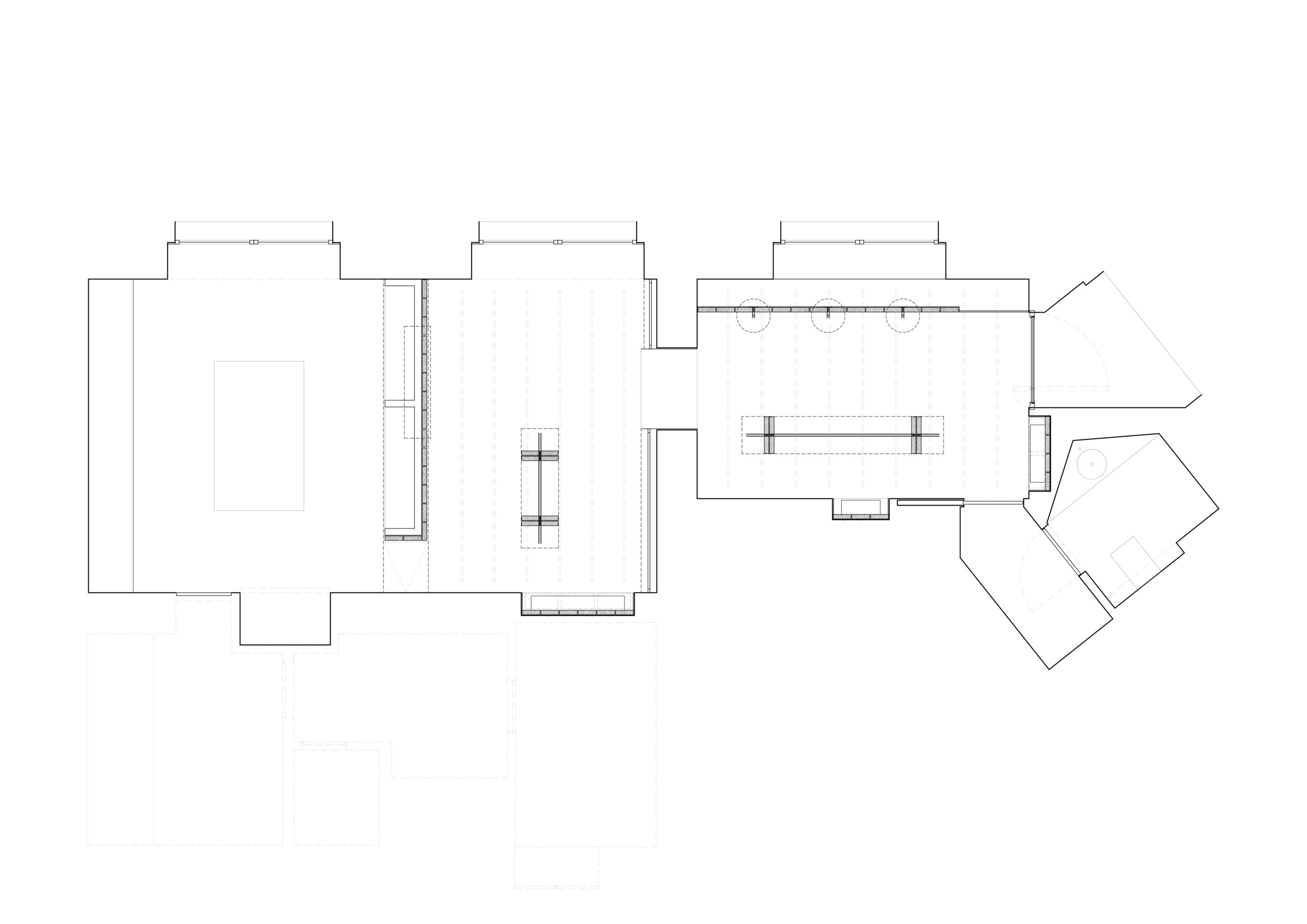
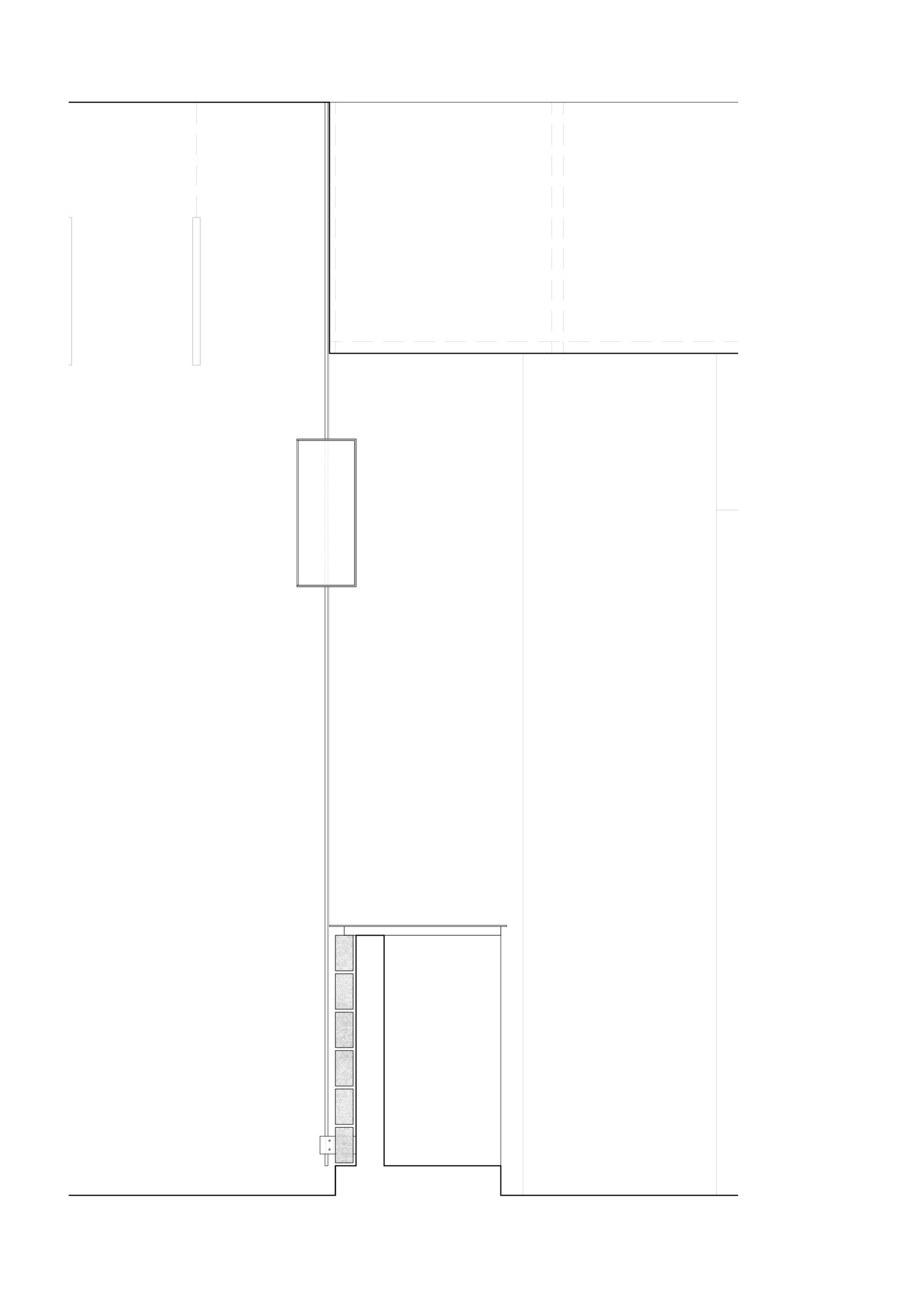
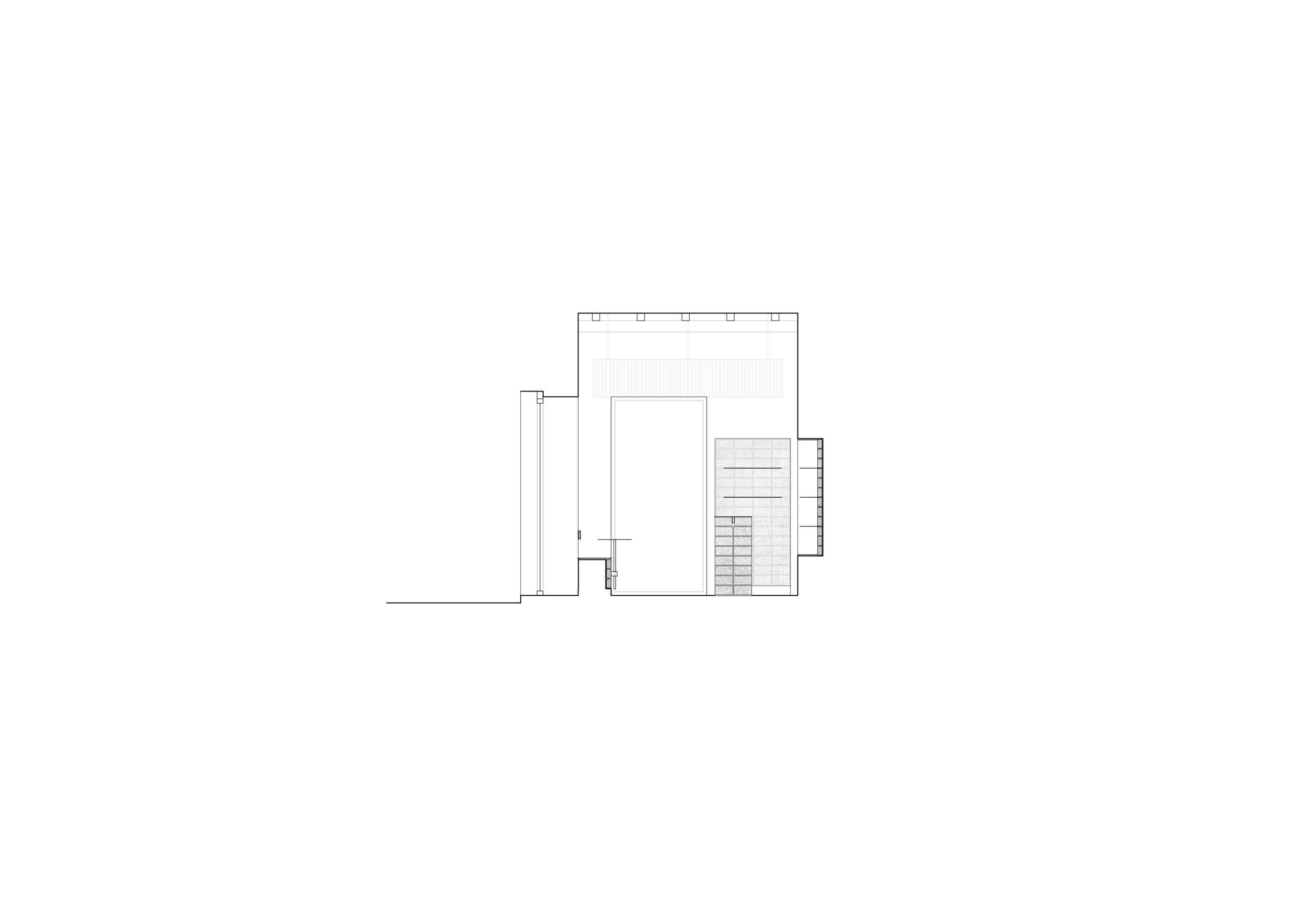
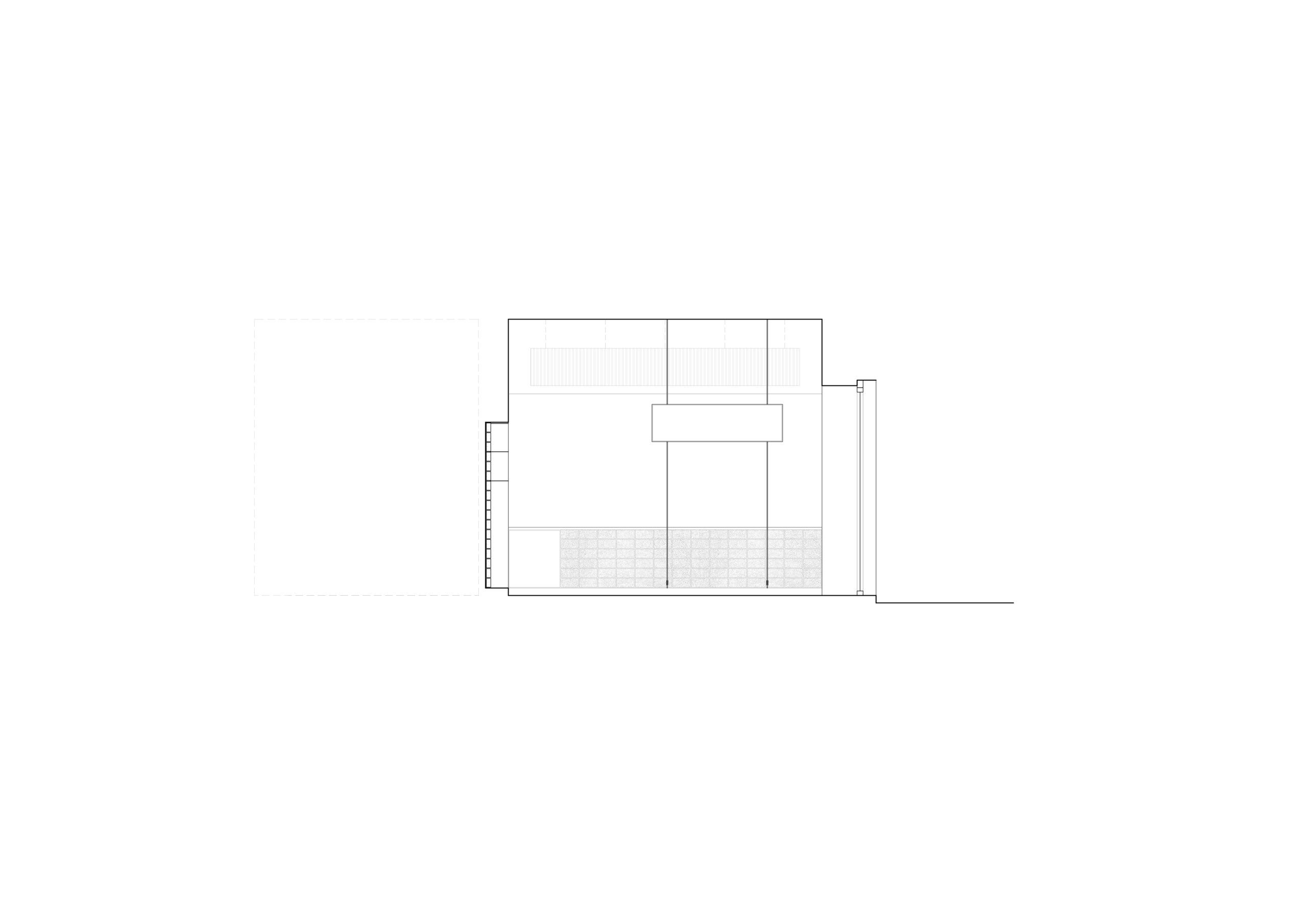
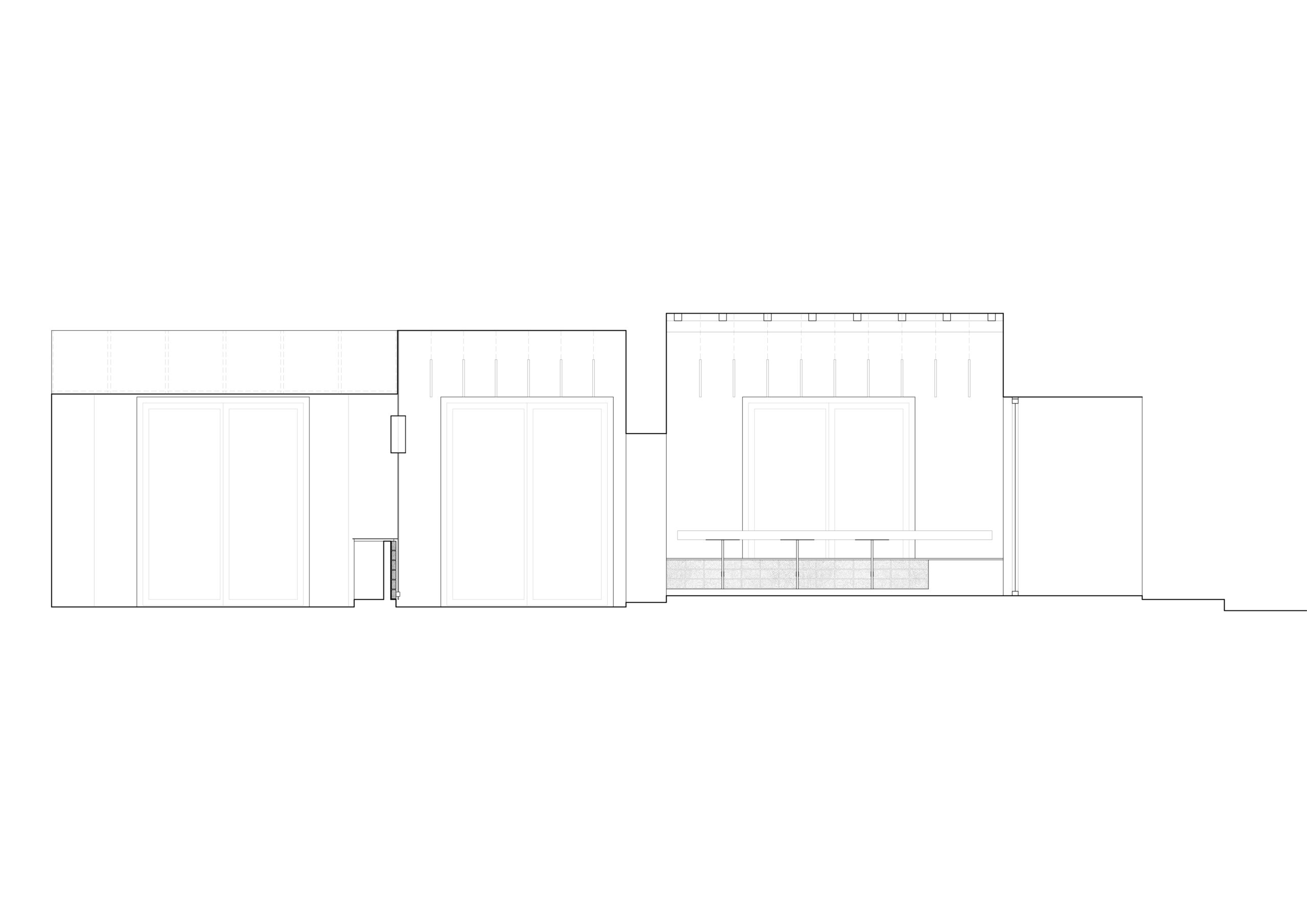
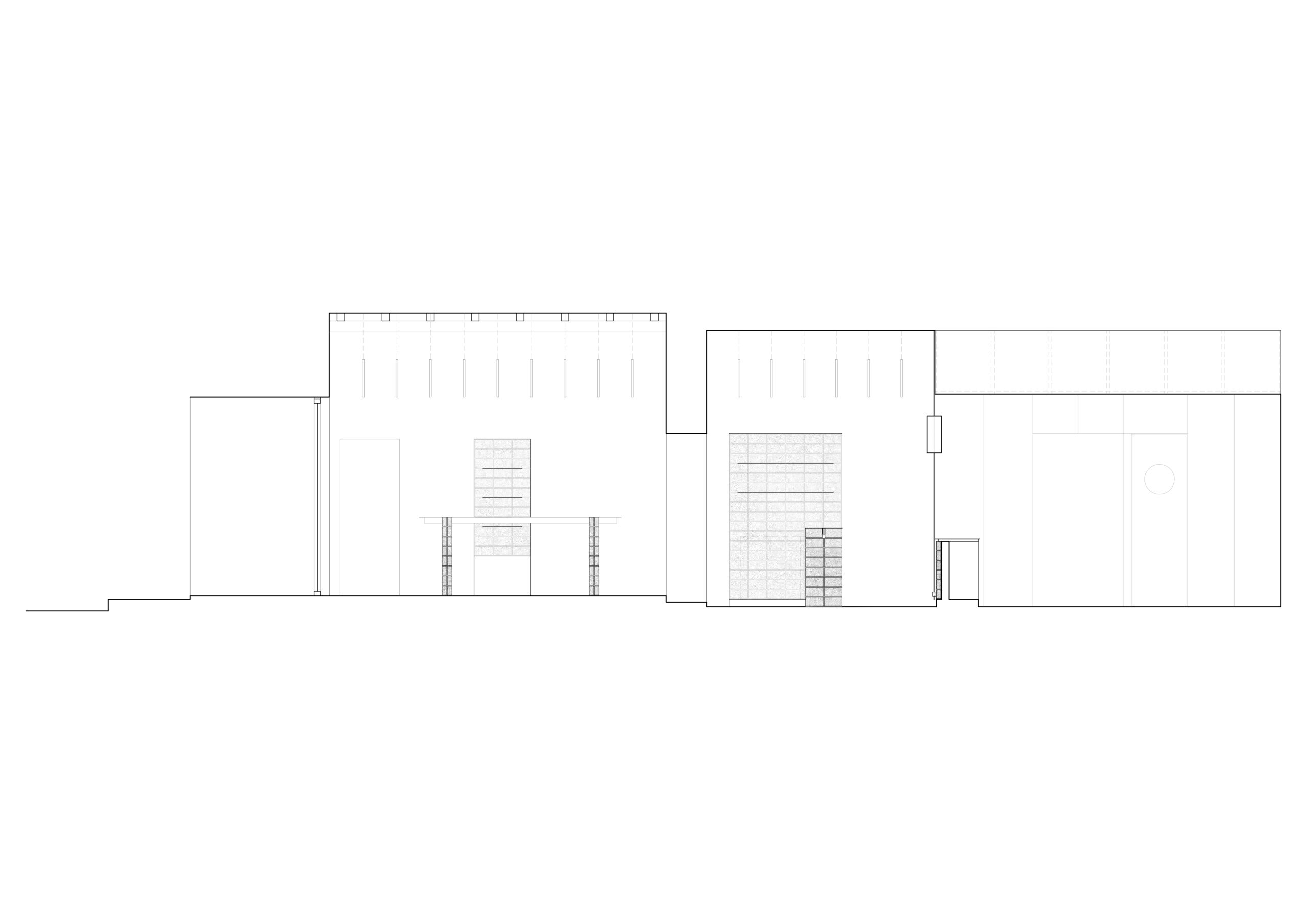
Located on the ground floor of a historic building in central Milan, this renovation project transforms a formerly commercial unit into a smash burger venue defined by a raw, urban aesthetic. The intervention is structured around a clear spatial strategy, dividing the interior into two primary areas—public and dining—and a dedicated service zone.
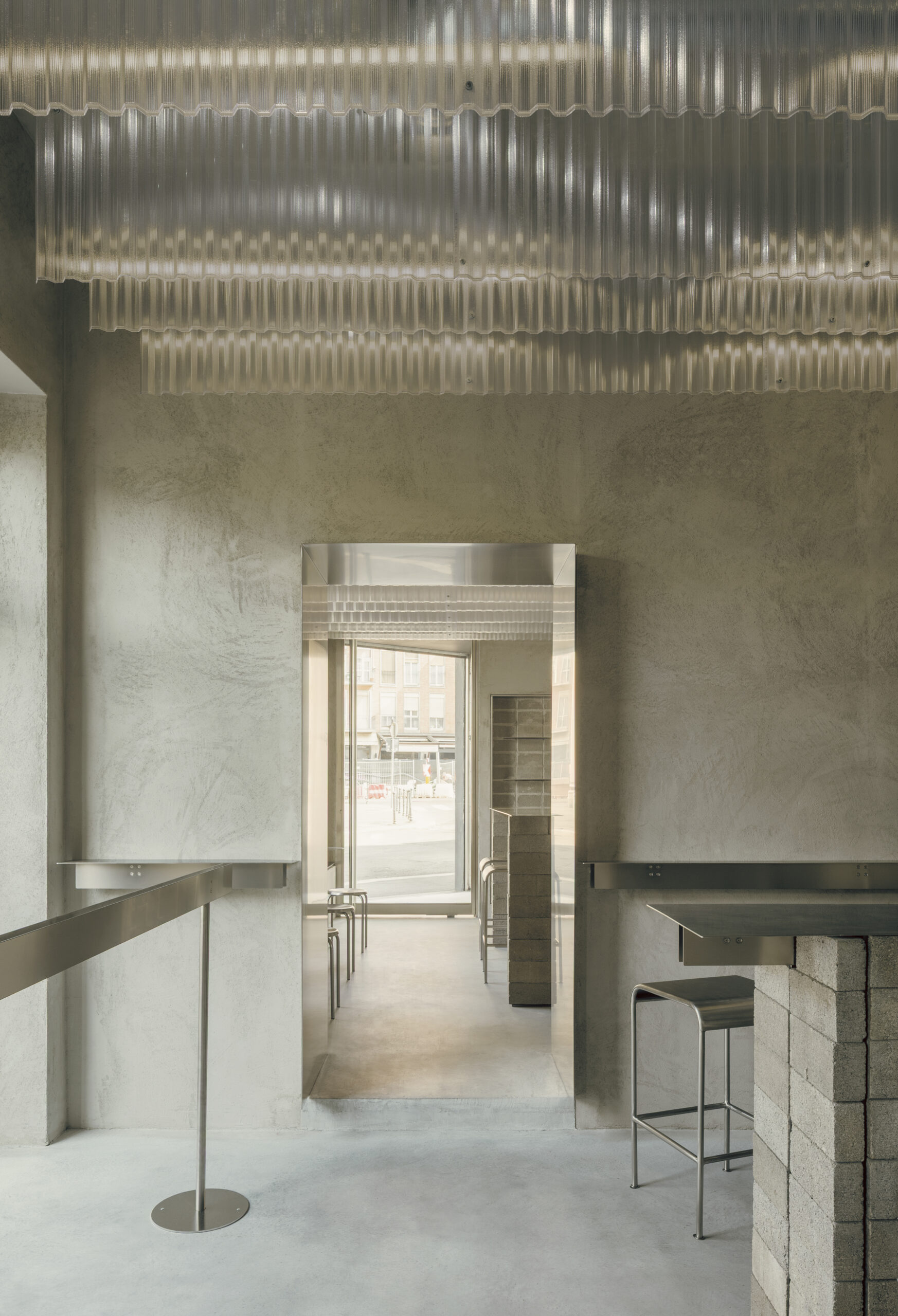
The main spatial intervention is the setback of the existing glass façade, rather than aligning with the building’s perimeter, the new glazed frontage is set back and realigned according to the internal geometry., thereby placing the entrance on direct axis with the service counter and establishing a strong visual and spatial connection across the interior.
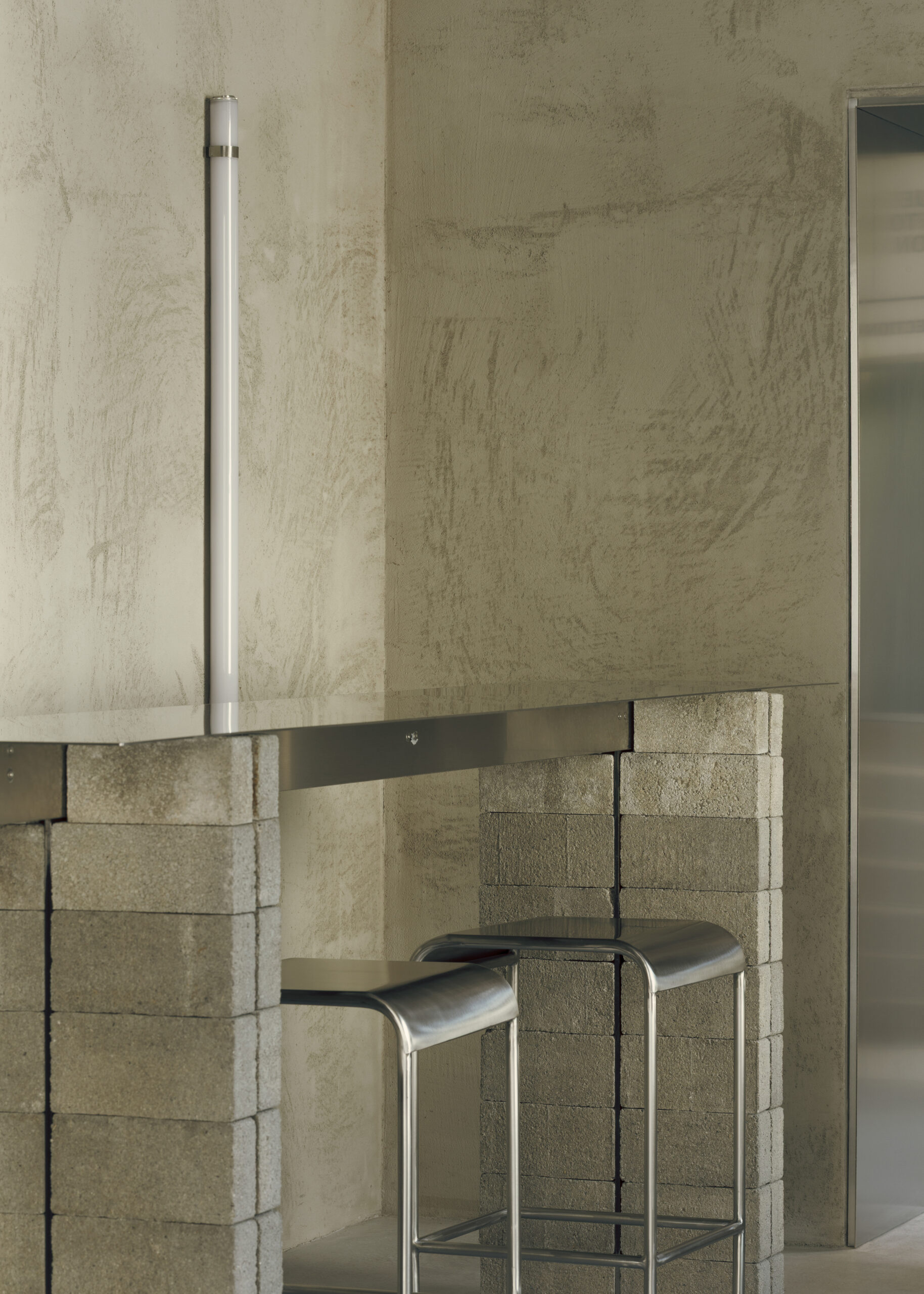
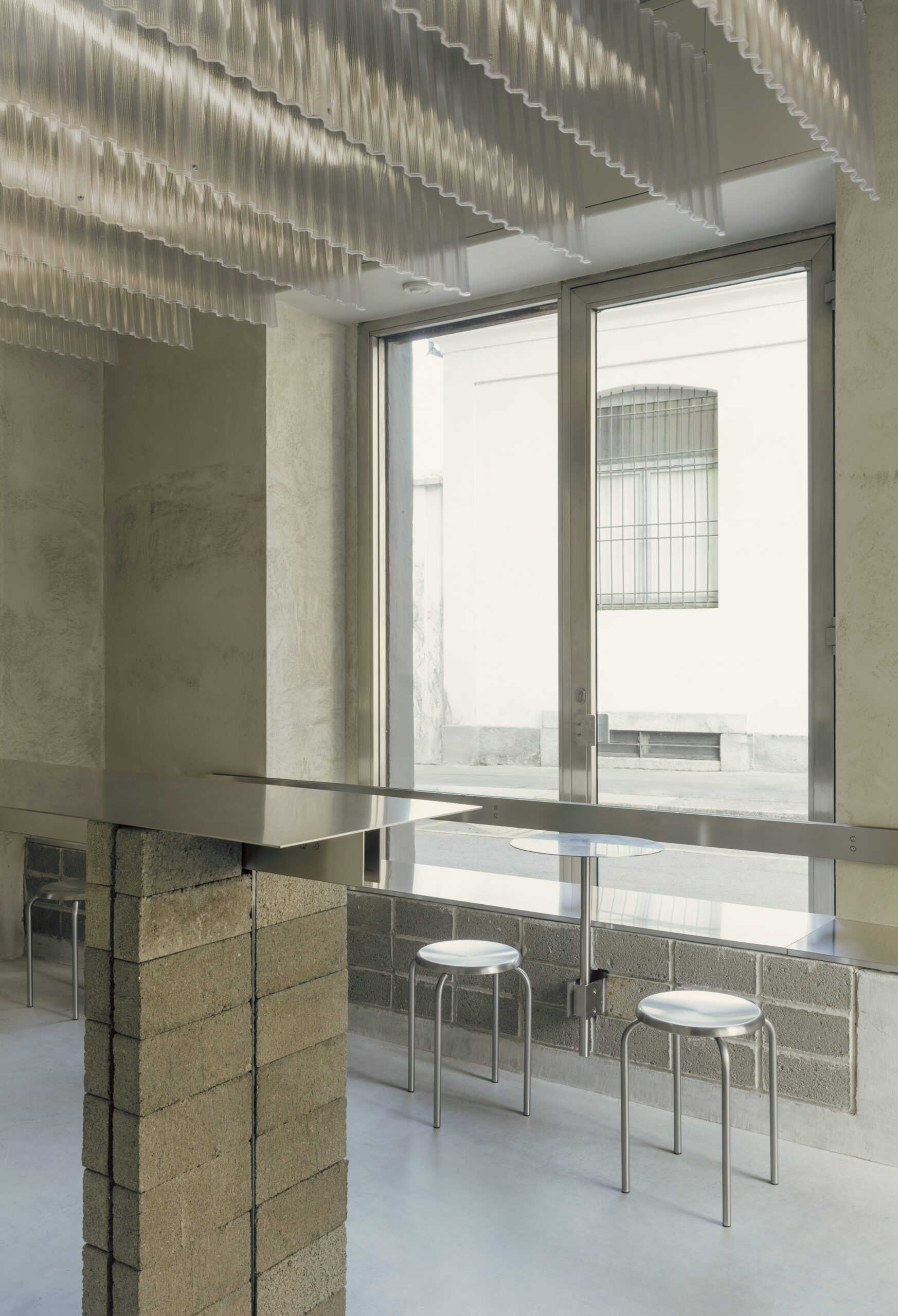
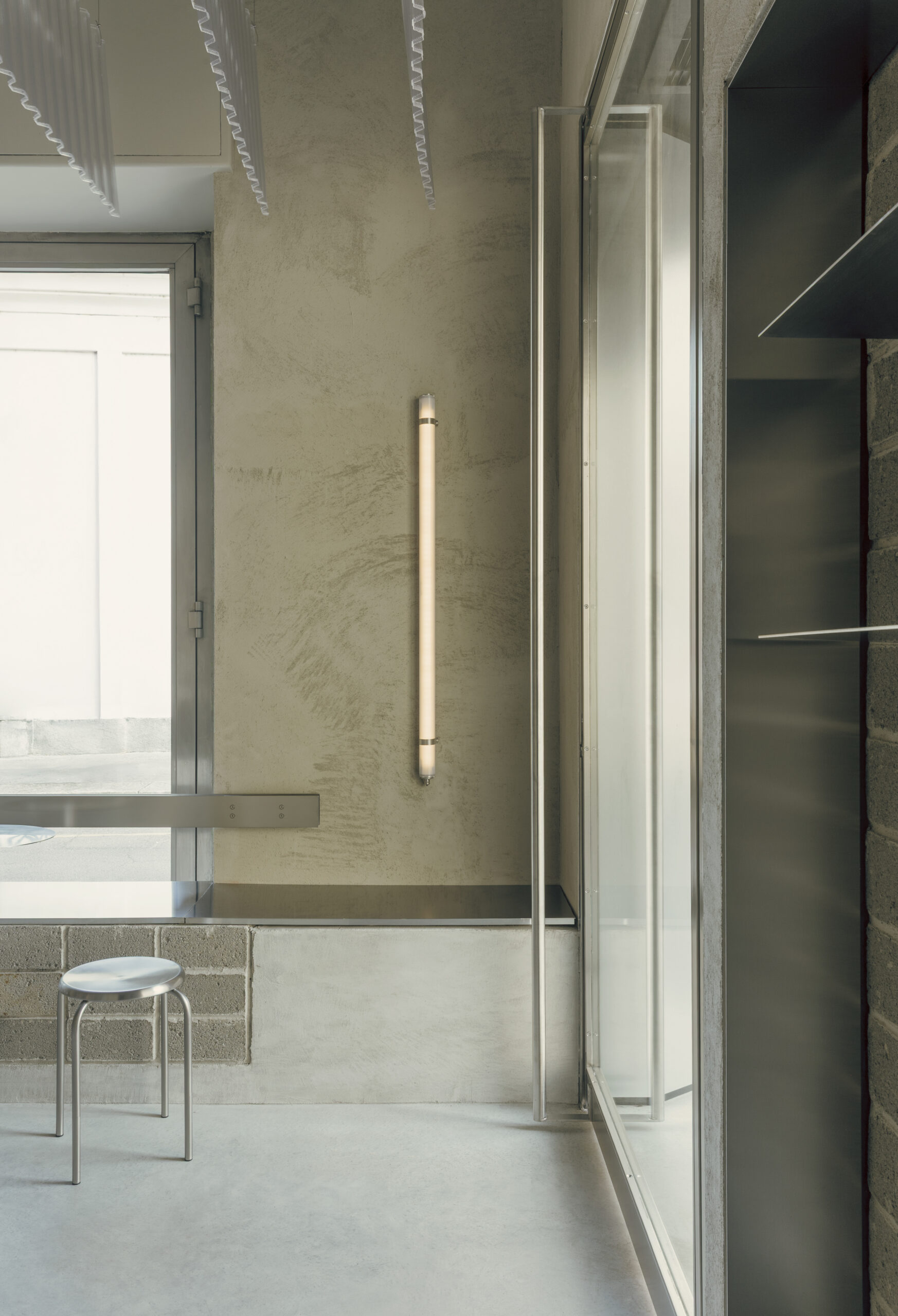
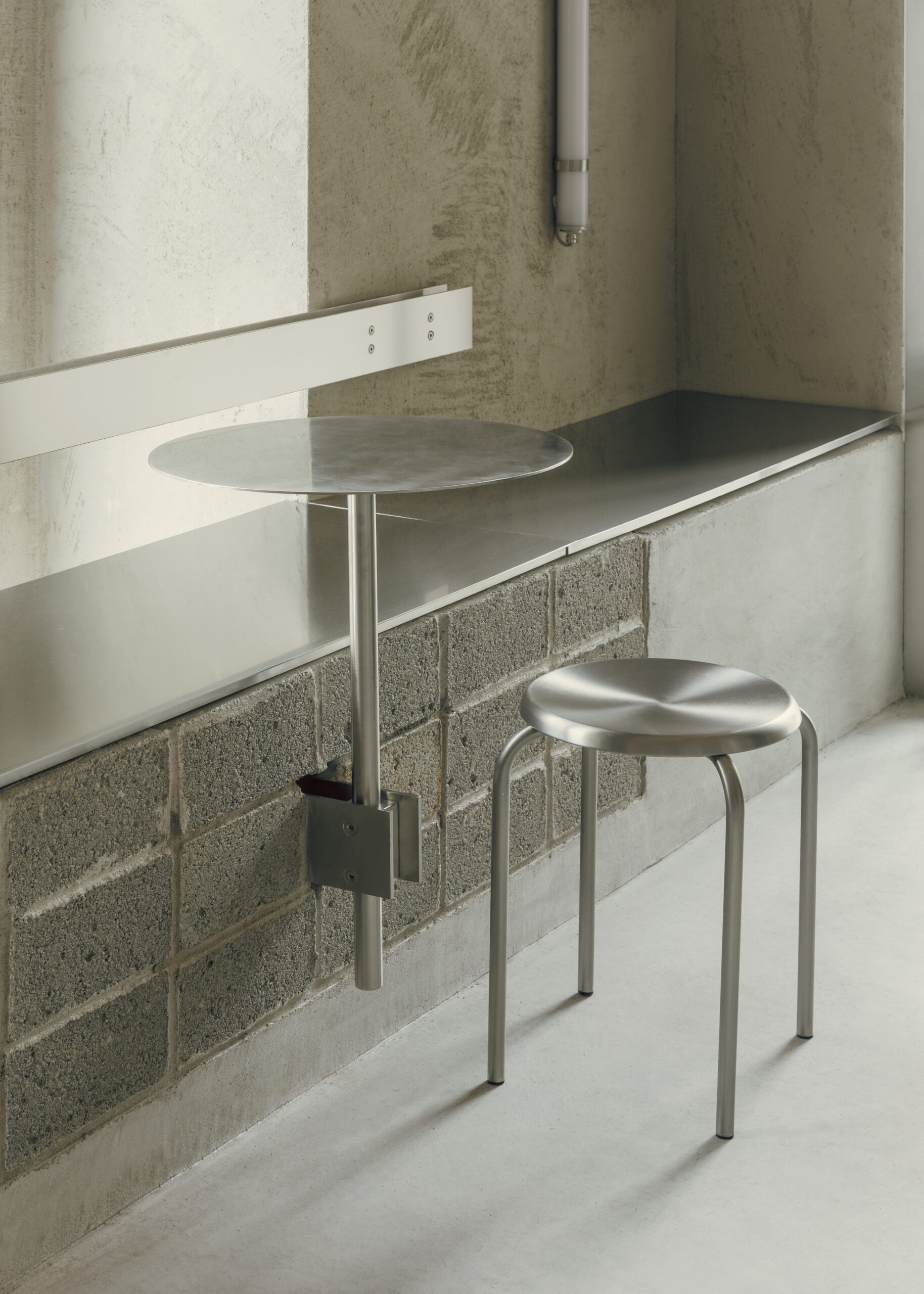
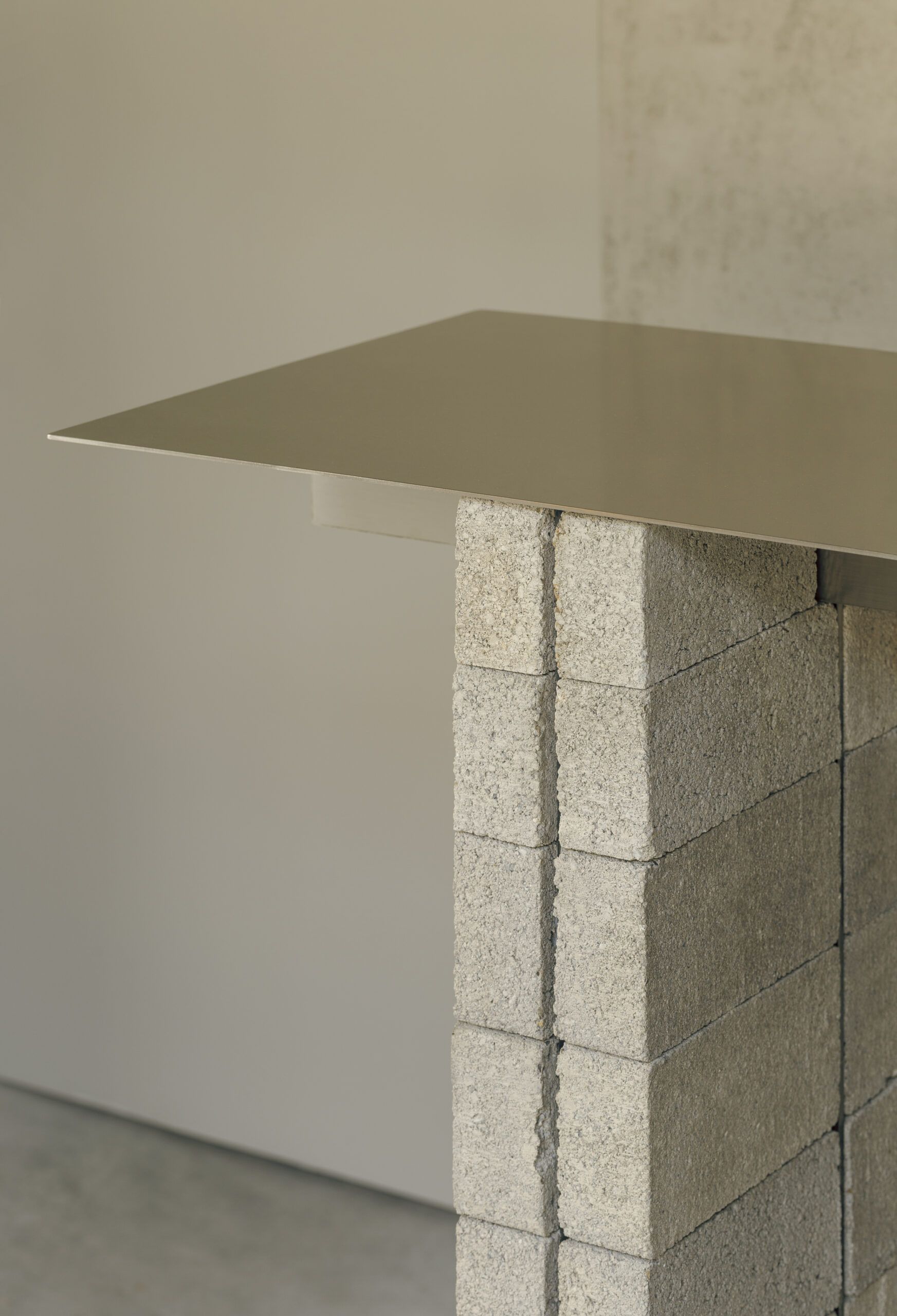
Inside, the choice of materials reflects the philosophy of the brand: an urban and understated street food space built with concrete and stainless steel. The built-in furnishings are integrated into the design, rising as extensions of the floor: concrete block tables, benches, niches, and the counter itself are conceived as monolithic elements.
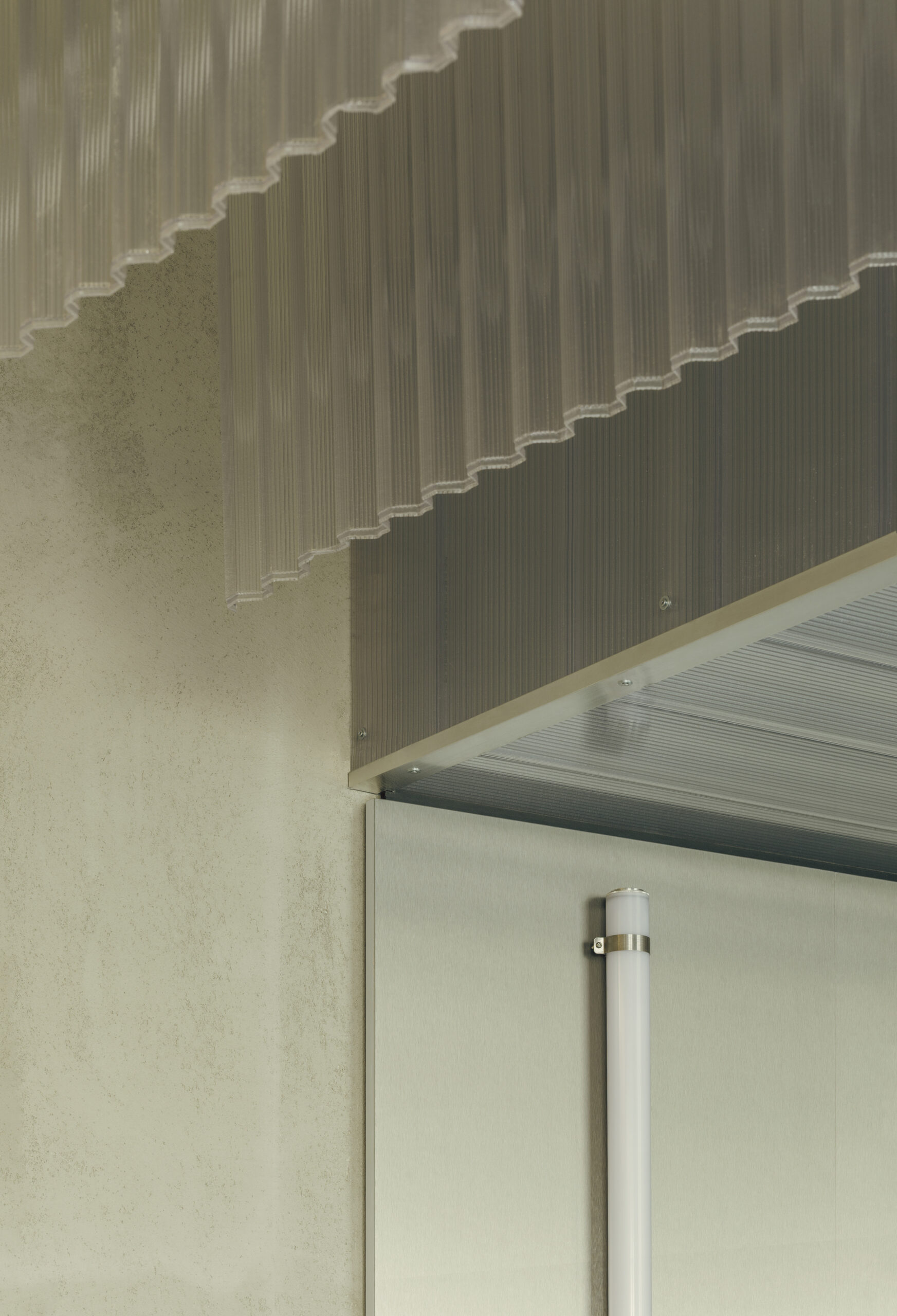
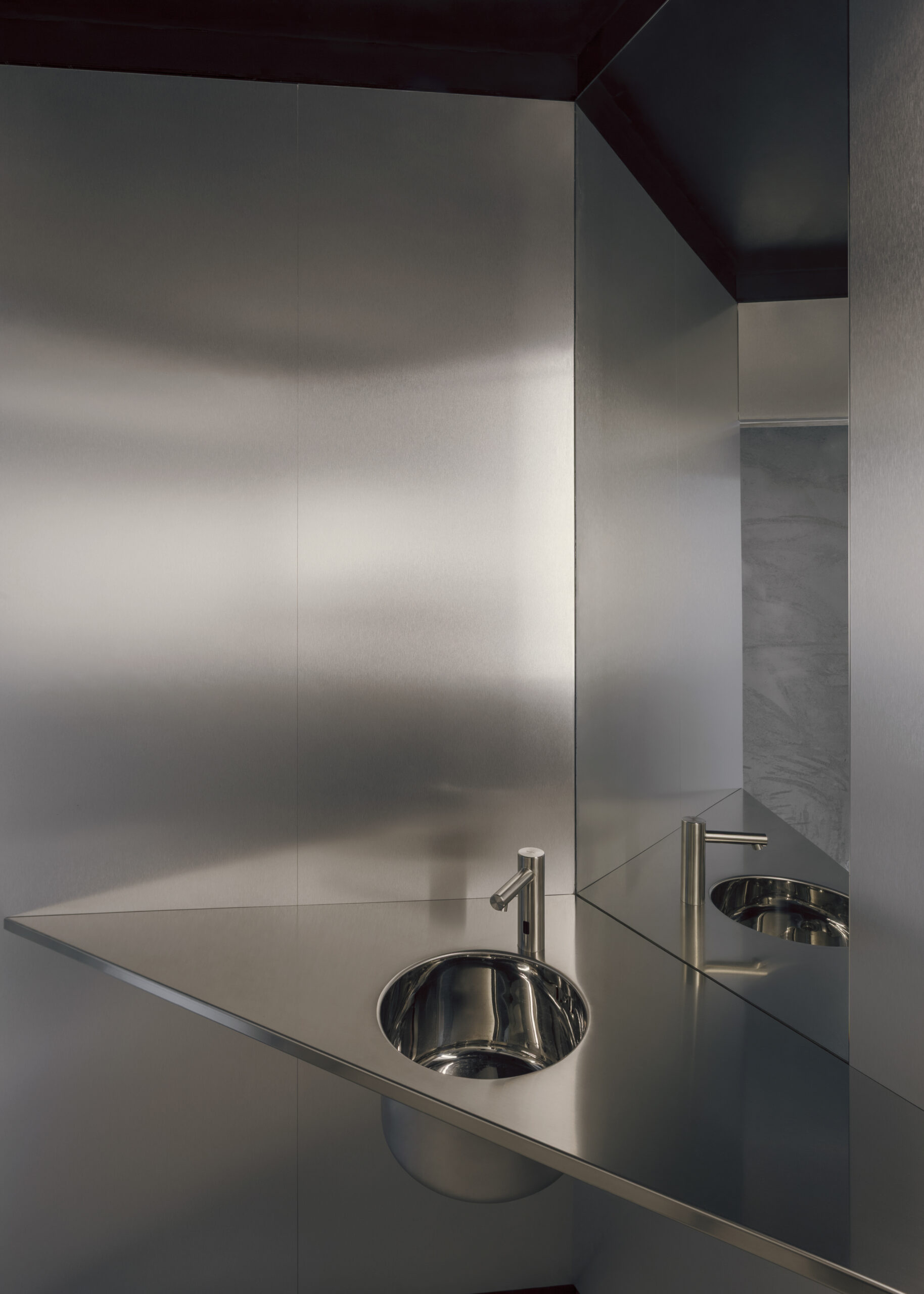
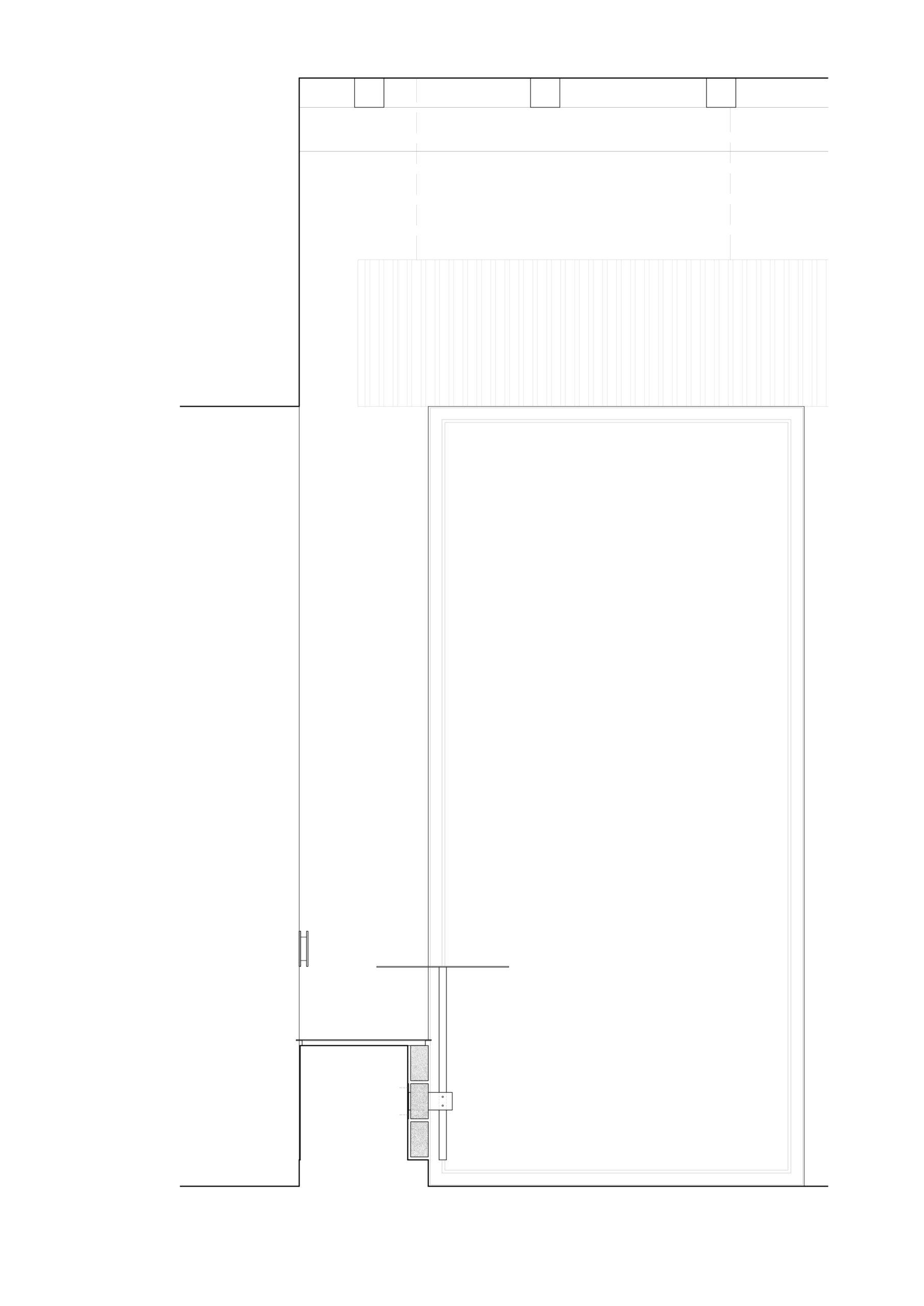
Construction elements are intentionally left exposed, lending rhythm and architectural legibility to the space. Stainless steel is inserted with precision into the joints of the concrete blocks, forming integrated surfaces—tables, seating, shelving, and workstations—that punctuate the space with industrial refinement. Above, a suspended system of polycarbonate curtains conceals lighting and mechanical systems while diffusing a soft, ambient glow. This visual gradient culminates in the open kitchen: a recessed, stainless-steel niche framed by translucent polycarbonate ceiling panels, establishing the kitchen as both a functional core and a luminous focal point.
Year
2025
Place
Milan, Italy
Client
STREET
Project
SOLUM
Collaborators
Gianmario Vecchiato
Giulia Grifoni
Photos
Nicolò Panzeri
SOLUM is an architecture office based in Milan established in 2019 by Mattia Agates, Lorenzo Campagna, Filippo Gismondi and Alessandro Loda after their graduation at the Accademia di Architettura di Mendrisio, (CH).
The studio works with a diversity of projects at various scales from urban planning to interior projects. It has participated in several national and international competitions, also in collaboration with other architects, winning some prizes and awards.
SOLUM is also involved in research and education activities as design teaching assistants at the Politecnico di Milano and Accademia di Architettura di Mendrisio USI.
Mattia Agates, Rome 1994
He graduated in 2019 from Accademia di Architettura di Mendrisio USI, in Switzerland. In 2015, he worked for Al-Jawad Pike Architects in London. In 2017, in Mendrisio, he founded the student association Concreto and Archealizar, a studio for the realization of images of architecture and design. In 2019 he founded SOLUM. From 2024 he’s teaching assistant at Accademia di Architettura di Mendrisio USI.
Lorenzo Campagna, Rome 1994
He graduated in 2019 from Accademia di Architettura di Mendrisio USI, in Switzerland. In 2015, he worked for Manuel Aires Mateus in Lisbon. In 2017 he worked for Itten Brechbuhl in Lugano and in Mendrisio, he founded the student association Concreto and Archealizar, a studio for the realization of images of architecture and design. From 2019 he’s teaching assistant at Politecnico di Milano and from 2024 at Accademia di Architettura di Mendrisio USI. In 2019 he founded SOLUM.
Filippo Gismondi, Milan 1994
He graduated in 2019 from Accademia di Architettura di Mendrisio USI, in Switzerland. In 2015, he worked for Manuel Aires Mateus in Lisbon. In 2017, in Mendrisio, he founded the student association Concreto and Archealizar, a studio for the realization of images of architecture and design. From 2019 he’s teaching assistant at Politecnico di Milano. In 2019 he founded SOLUM.
Alessandro Loda, Desenzano 1994
He graduated in 2019 from Accademia di Architettura di Mendrisio USI, in Switzerland. In 2015, he worked for HKS Architects in London. In 2017, in Mendrisio, he founded the student association Concreto and Archealizar, a studio for the realization of images of architecture and design. In 2019 he founded SOLUM.
Collaborators
Laura Acanfora, Alberto Allevi, Giovanni Battocletti, Silvia Beretta, Niccolò Calabrese de Feo, Giulia Grifoni, Yekta Khalaji, Gian Mario Vecchiato